Purpose, Calling, and Design: Identity Expressed Through Action

Introduction One of the greatest crises of the modern world is not merely moral confusion, political instability, or cultural fragmentation. Beneath all these things exists a deeper fracture: humanity no longer understands why it exists. People search for identity through achievement, pleasure, influence, ideology, relationships, career success, activism, visibility, or emotional validation, yet many still experience emptiness because the human soul was never designed to discover itself apart from its Creator. Scripture presents humanity not as an accidental biological occurrence but as intentional creation carrying divine purpose. This reality changes the way we understand life itself. According to the biblical narrative, human beings were not created simply to survive, consume resources, reproduce, and eventually die. Humanity was created to express something about God within creation. The opening chapters of Genesis establish that mankind was designed to represent God’s nature, steward His creation, cultivate order from chaos, and participate in the unfolding of His purposes in the earth. However, sin distorted humanity’s understanding of itself. The fall did not merely introduce immoral behavior into the world; it fractured identity, distorted purpose, corrupted desire, and disconnected humanity from the source of life itself. Since then, mankind has continually attempted to redefine purpose apart from God. The New Covenant through Christ is God’s answer to that fracture. Salvation is not merely the forgiveness of sins so that humans can one day escape earth and go to heaven. The New Testament repeatedly presents salvation as restoration into relationship, alignment, transformation, and participation in God’s Kingdom. Through Christ, humanity is invited back into the original intention of God. This class explores three foundational realities that define human existence according to Scripture: Purpose — why humanity exists. Calling — how purpose becomes expressed through assignment and action. Design — the unique formation through which each individual manifests that purpose. These concepts are deeply connected. When misunderstood, people often live fragmented lives, separating spirituality from work, ministry from culture, faith from responsibility, and identity from action. Scripture does not allow such separation. The biblical vision of humanity is holistic. God is concerned not only with religious activity, but with the transformation of the whole person and the restoration of creation through redeemed humanity. The goal of this course is not simply inspiration, but understanding, alignment, and transformation. 1. Humanity’s Original Purpose Humanity Was Created With Intentionality The Bible opens with one of the most profound declarations ever written: “In the beginning, God created the heavens and the earth” (Genesis 1:1). This opening establishes a foundational truth that shapes every other biblical doctrine: existence is intentional. Creation is not random. Reality is not meaningless. Humanity is not accidental. Genesis 1:26–28 introduces humanity in unique language unlike anything else in creation. God declares: “Let us make mankind in our image, according to our likeness, and let them rule…” This statement carries enormous theological significance. Humanity is created in the image of God. This does not mean humans physically resemble God. Rather, humanity was created to reflect His nature, character, wisdom, creativity, moral capacity, relational ability, and governing stewardship within creation. The text immediately connects identity to function. Humanity is made in God’s image and then entrusted with responsibility. The command to “fill the earth and subdue it” reveals that mankind was intended to cultivate, organize, steward, develop, and expand God’s order throughout creation. This is critically important because it means human purpose was never limited to passive existence or religious ritual. From the beginning, humanity was designed for meaningful participation in God’s unfolding order. Genesis 2:15 deepens this understanding when it states that God placed Adam in the garden “to work it and take care of it.” Work itself was not the curse. Meaningful stewardship existed before sin entered the world. The curse distorted labor into painful toil, but productive cultivation was part of humanity’s original design. This radically challenges modern assumptions. Many people unconsciously believe spirituality means separation from practical life. Yet Scripture begins with humans cultivating land, organizing creation, naming animals, building family structures, and exercising stewardship under God’s authority. Human purpose included creativity, administration, development, leadership, and cultivation from the very beginning. Purpose, therefore, is not primarily about personal fulfillment. It is about alignment with divine intention. Beneath the Surface Humanity’s Identity, Value, and Purpose Genesis 1:27 is one of the most foundational verses in all of Scripture because it defines humanity’s identity, value, purpose, and relationship to God before sin ever enters the narrative. The verse in Hebrew reads: וַיִּבְרָא אֱלֹהִים אֶת־הָאָדָם בְּצַלְמוֹ בְּצֶלֶם אֱלֹהִים בָּרָא אֹתוֹ זָכָר וּנְקֵבָה בָּרָא אֹתָם Transliterated: Vayyivra Elohim et-ha’adam b’tzalmo b’tzelem Elohim bara oto zakhar u’neqevah bara otam Literal rendering: “And God created the human in His image; in the image of God He created him; male and female He created them.” At first glance, this may sound simple, but in its original Hebrew structure and ancient context, this statement is extraordinarily dense. God Created — Bara 1. “God Created” — Bara The word used for “created” is bara (בָּרָא). This word is important because in the Hebrew Bible, bara is used uniquely of God’s creative activity. It does not merely mean manufacturing something materially. It carries the idea of bringing forth intentionally, establishing function, identity, and order. In the ancient Near Eastern world, creation language was not merely about material origin. It was also about purpose and role. So Genesis is not only saying: “God made humans.” It is saying: “God intentionally established humanity with identity and function inside creation.” This directly opposes ancient pagan ideas where humans were often viewed as: slaves of the gods, accidental byproducts, or expendable laborers for divine beings. Genesis radically elevates human dignity. “The Human” — Ha’adam 2. “The Human” — Ha’adam The Hebrew says ha’adam (הָאָדָם). This does not initially mean “Adam” as a personal name in the modern sense. It means: “the human,” “humanity,” or “mankind.” It comes from adamah (אֲדָמָה), meaning: ground, soil, earth. The text intentionally connects humanity to creation itself. Humans are both: earthly, yet
What is like Being a Disciple of Jesus
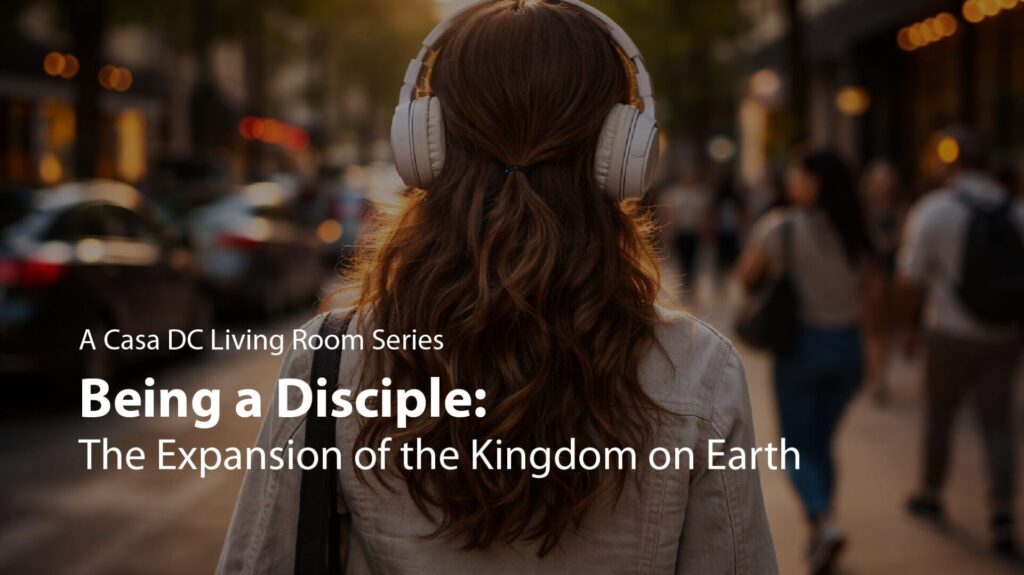
WHAT IS A DISCIPLE, REALLY? The modern use of the word “disciple” has been diluted to the point where it often describes participation rather than transformation. In many church environments, a disciple is assumed to be someone who attends regularly, engages in Bible study, and agrees with core doctrines. However, when we examine how Jesus used the concept, it becomes clear that discipleship is not centered on agreement but on reformation of life through submission to a person. The term used in the New Testament, mathētēs, describes someone who attaches themselves to a teacher not only to learn ideas but to adopt a way of living. This distinction is critical because it shifts discipleship away from intellectual accumulation and into identity restructuring. A disciple is not merely informed by Christ; a disciple is formed by Christ. Jesus establishes this clearly in Luke 6:40, where He states that a fully trained student will become like the teacher. This statement eliminates the possibility of passive Christianity. If transformation into the likeness of Christ is not occurring, then discipleship, in its biblical sense, is not taking place. One of the most subtle but pervasive errors in modern teaching is the assumption that knowledge produces transformation. While knowledge is necessary, it is not sufficient. The Pharisees possessed extensive knowledge of Scripture, yet Jesus consistently confronted them because their lives did not reflect the nature of God. This reveals a foundational truth: knowledge without submission reinforces self-governance rather than dismantling it. A disciple is not defined by what they know, but by who they are becoming. This means that the primary metric of discipleship is not comprehension but alignment—alignment of thought, decision-making, and behavior with the life of Christ. THE WAR OF IDENTITIES: ADAM VS CHRIST To understand discipleship, one must first understand that Scripture does not present humanity as morally neutral beings trying to improve themselves. Instead, it presents two distinct identities: one rooted in Adam and the other in Christ. These are not symbolic categories but functional realities that determine how a person interprets and interacts with the world. In Adam, humanity operates from a position of separation, self-preservation, and limited perception. This identity is governed by fear, survival instincts, and the need to establish worth through performance. In contrast, the identity in Christ is defined by reconciliation, alignment with truth, and participation in God’s purpose and divine nature. These are not merely theological ideas; they are operational frameworks that shape behavior at every level. Paul articulates this contrast in 1 Corinthians 15:22, where he states that all die in Adam but are made alive in Christ. This is not describing physical death alone but a condition of existence. Discipleship, therefore, is not about improving the Adamic nature but about transitioning out of it entirely. This is not an attempt to modify behavior without addressing identity, which results in temporary change at best and internal conflict at worst. When a person attempts to live according to Christ while still identifying with Adam, they experience inconsistency, frustration, and eventually disengagement. Paul resolves this tension in Galatians 2:20 by declaring that the old self has been crucified and that Christ now lives in him. This statement is not poetic language; it is a declaration of operational reality. The life of a disciple is not self-directed improvement but participation in a different life altogether. Discipleship is not the enhancement of your current identity. It is the replacement of your governing identity, which then produces fruit: new patterns of thinking and living. THE MODEL OF FORMATION: HOW JESUS BUILT DISCIPLES Jesus did not rely on structured lectures as the primary means of forming His disciples. While He taught extensively, His method centered on immersive formation, where His disciples were continuously exposed to His way of thinking, speaking, and acting. This method ensured that learning was not isolated from application. In Mark 3:14, Jesus appoints the twelve “that they might be with Him.” This phrase is foundational because it establishes proximity as a requirement for transformation. The disciples did not simply receive information; they observed how Jesus responded to pressure, interacted with people, and made decisions. Discipleship cannot occur in isolation, nor can it occur through passive consumption. It requires structured exposure, active participation, and continuous correction. This proximity led to imitation. The disciples attempted to replicate what they saw, often imperfectly. When they failed, Jesus corrected them directly, sometimes in ways that would be considered confrontational by modern standards. For example, in Matthew 16:23, Jesus rebukes Peter sharply, not to condemn him but to realign his thinking. Finally, Jesus sent them out to practice independently, as seen in Matthew 10:1. This progression—from proximity to imitation to correction to commission—forms a complete cycle of discipleship. Removing any part of this cycle results in incomplete formation. HISTORICAL CONTINUITY: FROM THE PROPHETS TO CHRIST Discipleship did not originate with Jesus; it is rooted in a broader biblical pattern of relational formation. The “schools of the prophets,” referenced in 2 Kings 2:3, functioned as environments where individuals were trained to discern and respond to God’s voice. These were not academic institutions but communities of practice, where obedience and sensitivity to God were cultivated. The relationship between Elijah and Elisha provides a concrete example of this model. When Elijah calls Elisha, the response is immediate and costly. Elisha destroys his means of livelihood, symbolizing a complete break from his previous identity. This act is not symbolic enthusiasm; it is a strategic elimination of alternatives, ensuring that his commitment cannot be reversed under pressure. As Elisha follows Elijah, he demonstrates persistence. Even when given opportunities to leave, he refuses. This persistence reveals that discipleship is not sustained by convenience but by conviction. Discipleship involves cost, persistence, and alignment with a larger purpose. It is not an optional enhancement to life but a redefinition of life’s direction. When Elisha requests a “double portion” in 2 Kings 2:9, he is not seeking superiority but inheritance. In the cultural context, the firstborn son received a
Forgiveness, Healing & Kingdom Alignment

Forgiveness as Alignment, Not Emotion THE REAL PROBLEM WITH FORGIVENESS Forgiveness is not difficult because it is complex. It is difficult because it confronts something deeper than behavior—it confronts our understanding of justice, identity, and control. Most people approach forgiveness from the perspective of the wound. They measure forgiveness by how deeply they were hurt, how unfair the situation was, and how justified their reaction feels. In doing so, forgiveness becomes conditional: “I will release this when it feels resolved, when they acknowledge it, or when I feel ready.” But this approach reveals a fundamental misunderstanding. Forgiveness in Scripture is never presented as a reaction to human behavior. It is presented as a response to God’s nature and God’s action toward us. This means forgiveness is not primarily about what happened between you and another person—it is about whether your internal world is aligned with the Kingdom you claim to represent. If this is not understood, two distortions emerge: Some people refuse to forgive in the name of justice.Others forgive superficially in the name of peace. Both are incorrect. One holds onto control. The other avoids truth. The Kingdom requires neither control nor avoidance—it requires alignment. FORGIVENESS IS NOT A HUMAN IDEA—IT IS A THEOLOGICAL POSITION In Ephesians 4:32, Paul instructs believers to forgive “as God forgave you in Christ.” This is not poetic language. It is a direct framework. To understand forgiveness, you cannot start with your situation. You must start with how God forgave you. This immediately removes forgiveness from the realm of preference and places it in the realm of participation in God’s nature. The Greek word used for forgiveness charizomai(χαρίζομαι) is rooted in charis, which means grace. It carries the idea of freely giving, extending favor, and canceling what is owed. This is not an emotional concept—it is a relational and legal action. When God forgave humanity through Christ, He did not ignore sin. He did not minimize it. He did not pretend it did not exist. He acknowledged its full weight—and then chose to absorb the cost rather than demand repayment from those who committed it. That is forgiveness. This immediately corrects a common error: forgiveness is not the denial of wrong. It is the decision not to collect payment for the wrong. When you forgive, you are not saying, “It didn’t matter.” You are saying, “I will not be the one to extract repayment.” That distinction is critical. THE CONCEPT OF DEBT: THE CORE OF EVERY OFFENSE Every offense creates something whether people recognize it or not: it creates a debt structure. If someone lies to you, they owe you truth.If someone betrays you, they owe you loyalty.If someone dishonors you, they owe you restoration of value. This is not merely emotional—it is deeply embedded in how human beings perceive justice. We are designed to recognize imbalance and expect correction. This is why, after being hurt, the mind naturally begins to calculate: This internal accounting is not accidental. It reflects a real principle: injustice creates debt. The problem is not that the debt exists. The problem is what we do with it. If the debt is not released, the human heart begins to reorganize around it. Thoughts become repetitive, emotions become reactive, and identity becomes entangled with the event. The person who offended you is no longer just part of your past—they become part of your internal structure. This is why people say they have “moved on,” but still react strongly when the situation is mentioned. The debt was never released—it was simply buried. Forgiveness is the moment where that internal accounting system is interrupted, and a decision is made: “I will not collect this debt.” WHY FORGIVENESS IS SO DIFFICULT: THE NEED FOR CONTROL At its core, unforgiveness is not primarily about pain—it is about control over justice and resistance to God’s nature. When someone hurts you, something inside of you seeks equilibrium. You recognize that something has been violated, something is out of order, and something must be made right. That instinct is not wrong—it reflects a real awareness of justice embedded in human design. The problem begins when that awareness turns into ownership. When justice does not manifest in the way you expect—or within the timing you consider acceptable—the human tendency is to take responsibility for correcting the imbalance. If it cannot be corrected externally, it is pursued internally through thoughts, expectations, and emotional posture. This is where vengeance begins—not first in actions, but in mindset. To understand this clearly, we must look at Jonah—not as a simple story of disobedience, but as a revelation of what happens when a person understands God’s power, yet rejects His nature. JONAH: WHEN YOU UNDERSTAND GOD, BUT RESIST HIS HEART Jonah is sent to Nineveh, a city marked by violence, oppression, and systemic evil. From a human standpoint, their judgment would not only seem justified—it would seem necessary. Jonah knew this. But Jonah also knew something deeper. In Jonah 4:2, he reveals his reasoning: “I knew that You are gracious and compassionate, slow to anger, and abundant in mercy… and that You would relent from bringing disaster.” This statement exposes the real conflict. Jonah did not run because he lacked faith.Jonah ran because he knew God’s character—and did not agree with how that character would be expressed. His issue was not ignorance of God.It was resistance to a God whose justice is expressed through love. GOD’S NATURE: LOVE AS THE FOUNDATION OF EVERYTHING Scripture does not say that God occasionally acts in love.It says that God is love (1 John 4:8). This means: God does not alternate between love and justice.His justice flows from His nature as love. This is what Jonah could not accept. Jonah could understand judgment.He could not accept a justice system that leaves room for: Jonah wanted justice that confirmed his perspective while God operates from love, even when justice is required. THE ROOT ISSUE: DISAGREEMENT WITH GOD’S OUTCOME Jonah had already concluded: Nineveh deserves judgment.Nineveh should pay.Nineveh should
LIVING FROM RESTORED IDENTITY: Mission, Authority, and Daily Reality

This whole topic about restored identity is not about feeling better about yourself. It is not about Christian self-esteem or motivational spirituality. This is about ontology (the nature of being). In Christ, you were not upgraded,; you were recreated. You were not spiritually refurbished. You were made new. 2 Corinthians 5:17 uses the Greek word “kainos” (καινός) — meaning new in kind, not renewed, not improved, not upgraded. • Not repaired.• Not adjusted.• Not spiritually remodeled. A new creation. If you were refurbished, you would still carry structural weakness. But you were recreated. The cross did not polish the old identity.It terminated it. You are not an improved version of the old you. That version is not under development — it is dead. Think about this: Where are you still acting like you are under construction instead of recreated? Do your decisions reflect “kainos” reality or old survival reflexes? What would change immediately if you truly believed the old identity is gone? SECTION 1 — IDENTITY CHANGES HOW YOU WALK INTO WORK You live in the DMV. You work in systems of power — government, engineering firms, corporate structures, education, policy, tech. In this region, identity is often built on: • Position• Clearance level• Title• Academic pedigree• Network That is constructed identity. If your identity depends on performance, you will: • Overwork to prove value• Fear exposure• Compete for validation• Avoid risk that threatens image But if you are justified, adopted, and seated in Christ: You don’t enter rooms to be validated.You enter rooms already established. You don’t negotiate from insecurity. You operate from position. Think about this: Where are you still trying to prove to yourself your worth in your professional life? If your belonging is already settled in Christ, what pressure loses authority over you? SECTION 2 — SECURITY CHANGES DECISION MAKING Identity precedes decision. Insecure identity decides from fear:• “What if I fail?”• “What if they reject me?”• “What if I lose influence?” Secure identity decides from purpose:• “What aligns with truth?”• “What reflects Christ?”• “What builds long-term impact?” If you are an heir (Romans 8:17), your future is not fragile. If you are justified (Romans 5:1), your past is not condemning. If you are adopted (Romans 8:15), your belonging is not conditional. When identity is secure, pressure loses authority. Think about your last major decision: Was it fear-driven or purpose-driven? What risk are you avoiding because failure feels existential? Would you decide differently if your identity were untouchable? SECTION 3 — FROM SURVIVAL TO FILIATION Most believers function professionally, but internally operate in survival mode. Survival mode looks like: • Constant approval seeking• Overcommitting to avoid disappointment• Avoiding confrontation to preserve acceptance• Measuring worth by output This is not humility, it is misaligned identity. In Christ, you are no longer spiritually vulnerable. Adam lost dominion.Christ restored it. You are not fighting for access; you already have access. You are not fighting for acceptance from God, you have acceptance. Survival belongs to the old man. Filiation belongs to the new creation. Think about this: Where in your life are you overworking to avoid rejection? Where do you avoid confrontation because approval feels necessary? Are you operating from sonship or from scarcity? SECTION 4 — EMOTIONAL STABILITY FLOWS FROM POSITION Anxiety often grows when identity is unstable. In the DMV, you live in a culture of constant metrics: • Performance reviews• Promotions• Project deadlines• Social comparison• Political volatility If your identity is constructed, every shift threatens you, but if you are seated with Christ in authority (Ephesians 2:6), your emotional center is not anchored in environment. You still feel pressure, but you do not collapse under it. You still experience challenge, bou do not redefine yourself because of it. Pressure reveals identity. It does not create it. Think about this: How do you respond to criticism? Does success inflate your ego or simply confirm your stewardship? What emotional patterns reveal an outdated internal system? SECTION 5— NEW CREATION MEANS NEW OPERATING SYSTEM “Kainos” = new in kind. This means: • You do not process conflict like before.• You do not process failure like before.• You do not process success like before. Old identity:• Success inflates.• Failure destroys. New identity:• Success does not define.• Failure does not cancel. Old identity:• Criticism threatens existence. New identity:• Criticism informs growth. This is not personality change, it is ontological shift. New creation means new operating system — not patched software. Think about this: What metrics currently shape your emotional stability? Validation, likes, friendship relations, power? If your position is seated with Christ, why are you reacting like you are threatened? What outcome has too much authority over your peace? SECTION 6 — MISSION AWARENESS You were not restored for comfort, you were restored for function. • Genesis design:• Reflect God.• Exercise dominion.• Steward creation. 2 Corinthians 5:18–20: Reconciled — to reconcile. In the DMV, this could means: • Engineers reflect integrity in systems.• Managers reflect wisdom and justice in decisions.• Teachers reflect truth in classrooms.• Policy makers reflect wisdom in governance. You are not trying to “survive” culture, you are called to influence it. Restored identity is not self-help, it is mission architecture. SECTION 7 — HOLINESS WITHOUT INSECURITY Sanctification does not build identity, but expresses it. You do not obey to earn sonship, you obey because you are a son. You do not serve to gain value, but serve from the value your new identity has given to you. Fear-based obedience exhausts leaders, but identity-based obedience produces clarity and multiply strong leaders model. Holiness without identity produces anxiety. Holiness from identity produces authority. How does your profession become an expression of restored identity? Where are you hiding instead of influencing? Are you surviving your environment or shaping it? SECTION 8 — THE REAL QUESTION The question is not:“Do I believe I am forgiven?” The question is:Am I making decisions like someone justified?Am I leading like someone adopted?Am I building like someone seated?Am I thinking like someone made new? Because if
The Restored Identity:

Living in God’s Present Truth for You Introduction To speak of restored identity is not to speak of religious self-esteem or of positive Christianized thinking. It is to speak of a profound theological reality: in Christ, God not only forgave our sins, but redefined who we are before Him. The cross was not only an act of mercy; It was an act of relocation. We go from being outside to being in Christ, from condemned to justified, from orphans to children, from enemies to heirs. However, many believers live as if that transformation is only future or partial. They know the doctrine, but they have not aligned their self-perception with revealed truth. That is why understanding the theology behind the restored identity is critical. When we understand justification, adoption, and our union with Christ, we stop living out of fear, guilt, or comparison, and begin to act out of security, belonging, and purpose. Restored identity does not eliminate responsibility or growth; it redefines its base. We no longer obey in order to be accepted, but because we have been accepted. We no longer serve to gain courage, but because we know our worth in Christ. Understanding this transforms the way we decide, work, love, and face challenges. To live from a restored identity is to live in alignment with God’s eternal truth and purpose for our lives. Why a theological frame? If the restored identity is not understood theologically, it eventually becomes empty emotional language. The Bible presents the human identity beginning in Genesis: man was created in the image and likeness of God, designed to reflect His character and exercise dominion under His authority. That identity implied relationship, dignity, and purpose. With the entrance of sin, the image was not destroyed, but it was distorted; Man went from communion to separation, from trust to shame, from authority to spiritual bondage. The cross not only forgives sins, but restores position. In Christ we are reconciled, justified, and adopted, recovering relationship with God and being relocated to our original identity. The Bible uses terms like redemption, reconciliation, and adoption to describe what happens spiritually when we believe in Christ. Redemption implies that our debt was paid; reconciliation, that the relationship with God was restored; adoption, that we were incorporated into His family. These realities are not progressive, but instantaneous in the spirit: by believing, we pass from death to life and from separation to sonship. However, although the work is complete in the spiritual, its manifestation in our minds, emotions, and behavior is progressive. We call this process of visible alignment with an already established reality transformation. What is Identity in the Light of The Scriptures? In the Bible, identity is not defined by self-perception but by relationship and position before God. Since Genesis, the identity of the human being has been established in two dimensions: Created in the image of God (Genesis 1:27) Designed to reflect His character and authority on earth Biblical identity does not begin with how man feels about himself. It begins with what God declares about man. In the biblical narrative, identity is always tied to: Origin (who do I come from?) Relationship (who do I belong to?) Purpose (what do I exist for?) When sin enters human history, it does not destroy the image of God, but it does distort man’s relationship and awareness of his standing before God. From that moment on, humanity lives with a fragmented identity: Spiritual separation Judicial fault Existential shame The New Covenant responds precisely to this fracture. Identity as a spiritual state, not only a moral one In Scripture, identity is not simply behavior. It is a spiritual state. For example, before Christ, Paul describes the human being as: “Dead in trespasses and sins” (Ephesians 2:1) “Sons of wrath” (Ephesians 2:3) He is not describing emotions. He is describing condition. After Christ, the language changes radically: “Made alive together with Him” (Ephesians 2:5) “Sitting in heavenly places” (Ephesians 2:6) “New creation” (2 Corinthians 5:17) Change is not cosmetic. It is ontological — relative to being. Restored identity, therefore, is not a progressive improvement of the old self, but is a real spiritual transformation based on union with Christ. Declared identity vs constructed identity In most human systems, identity is constructed. It is formed from achievements, discipline, social recognition and constant performance. From a young age we learn that we are “worthy” when we perform, when we meet expectations or when we stand out. In this scheme, identity is fragile because it depends on results. If we fail, we feel our value diminish. If we get it right, we reinforce it temporarily. It is a conditioned identity. However, biblical thought presents something radically different: the identity of the believer is not constructed; it is declared. It is not achieved by effort, it is not won by merit, it is not sustained by works. It is bestowed by God on the basis of the finished work of Christ. In the New Covenant, justification is not a reward for spiritual discipline, but a verdict pronounced by grace. Adoption is not a promotion for good behavior, but a sovereign incorporation into God’s family. The new creation is not the result of progressive moral improvement, but the immediate effect of union with Christ. This is crucial. If identity depended on performance, the believer would live in constant insecurity: every mistake would jeopardize his acceptance; each fall would question their belonging. Fear would replace freedom, and obedience would be born of anxiety, not love. But the gospel establishes a different basis: identity is anchored in what Christ did, not in what we do. The redemptive work is complete, objective, and sufficient. Therefore, the restored identity is stable. Now, although spiritual identity is stated and complete, our mind is not always aligned with that reality. Enter Romans 12:2: “Be transformed by the renewing of your mind.” Renewal does not create a new identity; it aligns our perception with the identity already given. It does not
Becoming Strong Where It Counts
By Ironmen | Casa DC Strength isn’t about how much weight you can lift — it’s about what you’re carrying inside.It’s about integrity when no one’s watching.Patience when life tests your limits.And faith when you’d rather take control. The world tells us to perform. God calls us to persevere. Real men build quietly — in their homes, in their hearts, and in their relationships.They lead by example, not ego.They serve, not just succeed. If life’s been heavy lately, don’t tap out.Breathe. Pray. Reset.You’re not losing — you’re being strengthened for what’s next. “Let us not grow weary in doing good, for at the proper time we will reap a harvest if we do not give up.” — Galatians 6:9 💬 Join the brotherhood. We meet to build, to grow, and to sharpen each other.👉 Connect with Ironmen
Finding Strength in the Middle of Chaos
By Brave Women | Casa DC Life doesn’t slow down — it simply shifts shape. One season, it’s full of routines and school lunches. The next, it’s decisions, deadlines, and endless “to-do” lists that somehow keep growing. If we’re honest, most of us don’t need more time — we need more peace.And peace doesn’t come from control; it comes from trust. When the noise rises, take a breath.Whisper a prayer.Remember that God isn’t waiting for your schedule to clear — He’s right there, in the middle of the mess. “Be still, and know that I am God.” — Psalm 46:10 You are not falling behind.You’re learning to walk with Him in real time — through dishes, deadlines, and difficult moments. So today, give yourself grace.You’re doing better than you think, and you’re not alone. 💬 Join our next Brave Women Gathering and meet others walking this same journey.👉 Learn More About Brave Women
The Fivefold Ministry: The Building and Maturity of the Body of Christ

Ephesians 4:11–16; 1 Corinthians 12:12–28; Acts 13:1; Acts 21:8; Colossians 1:28; 1 Peter 2:5; 2 Timothy 4:5; Hebrews 13: 17 Christ did not give ministries to His church to create hierarchies, but to build a mature body that represents Him on the earth. Each ministry reflects an aspect of the heart and purpose of Christ. But none, by itself, can express the fullness of His person. Maturity is reached when the five operate in unity and complementarity, equipping, building, and perfecting the body of Christ itself. 1. Christ, the Head, and the Built Body Ephesians 4 makes it clear that Christ Himself is the one who gave the ministries. He is the Head (Col. 1:18), and the ministries are channels so that His life may flow in the church. They are not owners of the church, but servants who facilitate growth. Each member of the body has a function, and together we reflect the fullness of Christ. The true strength of the church is that the ministries are built upon one another, complementing instead of competing. The apostle opens the way, the prophet gives direction, the evangelist brings fruit, the pastor cares, and the teacher affirms in the truth. Only integrated do we advance toward the mission of Christ: to disciple the world and reflect Him in character, word, and action. Ministerial unity is not only harmony, it is divine strategy: a living structure where each function supports the other, so that the church may be effective in extending the Kingdom everywhere. 2. The Purpose of the Fivefold Ministry When Christ ascended, He did not leave His church without direction nor tools to grow. Ephesians 4 teaches us that He Himself gave to the church five ministerial expressions: apostles, prophets, evangelists, pastors, and teachers. These ministries are not ornaments, nor positions of prestige, but gifts of Christ to guide His people toward maturity. The pluralistic model of Elohim (plural of majesty in Genesis 1:1) reveals God acting in perfect unity of diversity: “Let Us make man in Our image” (Gen. 1:26). Here there is no competition, but harmonious collaboration of different expressions in one single purpose. That same principle is reflected in the fivefold ministry (Eph. 4:11–13): five different but complementary ministries, which build one single body. Just as Elohim shows the richness of God in unity, the fivefold ministry manifests the fullness of Christ when apostles, prophets, evangelists, pastors, and teachers work together, avoiding centralism and promoting shared maturity. For that reason, the fivefold ministry is indispensable: its function is to equip, build, and lead the church to the fullness of Christ. Ephesians 4:12–13 points to three clear purposes: I. To perfect (equip) the saints In what areas of your spiritual life do you need to be “adjusted” or “equipped” to serve better? II. To build up the body of Christ In what way are you contributing to the construction of the “spiritual house” of your church? III. To bring to maturity and unity in Christ What evidences of maturity in Christ can be noticed in your life and in your church? What areas are still immature? In other words: the purpose of the fivefold ministry is not that a few “do the work,” but that the whole church is formed, activated, and strengthened to live its calling. Tip If the church is not being equipped, the ministries are not fulfilling their purpose. True unity is not to think the same in everything, but to share the same faith and mission in Christ. 3. Integrated Functions of Each Ministry When Paul describes in Ephesians 4:11–13 the five ministries, he does not present them as isolated compartments, but as complementary expressions of Christ Himself in His church. Each ministry has a unique function, but none is complete by itself. Just as a body needs all its members to function well, the church needs the ministries to operate in integration and not in independence. The key is that each ministry contributes something indispensable: But the extraordinary happens when these functions are integrated, creating a spiritual balance that builds the church in maturity. The integrated function avoids two extremes: The biblical model is unity in diversity: different ministries working in harmony to fulfill the same mission. That integration is what guarantees that the church not only grows in number, but in maturity, stability, and fullness in Christ. Tips Which ministry do we feel strongest in our community? Which is weakest? The imbalance shows: if there is much evangelism without shepherding, there are people without care; if there is teaching without evangelism, there is knowledge without fruit. What happens when a church focuses on only one ministry? 4. Synergy in Action In Acts 15, apostles, prophets, and elders gathered to decide together. That is synergy: different gifts that complement each other to solve problems and advance in mission. No ministry should work isolated. Example: in an evangelistic project: 5. Difference with the Spiritual Gifts The ministries described in Ephesians 4:11 (apostles, prophets, evangelists, pastors, and teachers) are gift-persons that Christ gave to the church with a stable and continuous calling to equip, train, and build up the believers. They are not titles of prestige, but permanent functions of service that form the community. In contrast, the spiritual gifts (1 Corinthians 12; Romans 12; 1 Peter 4:10) are manifestations of the Holy Spirit given to every believer according to the need of the moment, for mutual edification. While the ministries equip in a structural way, the gifts operate dynamically. Both work together for the fullness of the body. Simple example: the gifts are like tools (hammer, saw, brush); the ministries are like instructors who teach the whole community how to use them well. 6. Spiritual Government and Practical Administration in the Church The fivefold ministry focuses on spiritual functions: to equip, to build, to care for, and to guide the people of God. Its authority is founded on service and example (1 Pet. 5:2–3), not on control. That is why the government of
Substance Over Status: Peter’s Weight Wasn’t in His Name

Substance Over Status: Peter’s Weight Wasn’t in His Name “And when you have returned to Me, strengthen your brothers.” – Luke 22:32 Peter was the loud one. The brave one. The “natural leader.” But when pressure came, he cracked. The same man who said, “I’ll never deny you,” ended up doing it three times. How God Grows Substance in a Man Peter had confidence before character He had the will to fight but not the weight to stand. Many men today are gifted but ungrounded. Talented but spiritually thin. God doesn’t build leaders from the outside in — He starts in the soul. The breaking was part of the building. When Peter wept after denying Jesus, that wasn’t failure — that was foundation. Substance is formed when the mask cracks and the truth comes out. Jesus didn’t disqualify Peter — He restored him with a deeper calling. “Do you love me?”… “Feed my sheep.” Not preach. Not impress. Feed. Serve. Build. Peter’s title wasn’t enough. His voice wasn’t enough. His status collapsed because his substance was still shallow.But Jesus wasn’t done. THE KINGDOM CHALLENGE: In the world, status is given for image. In the Kingdom, weight is given for intimacy. Are you building a name, or building depth? Are you depending on gifts… or being shaped in silence? When no one is watching, what does my walk with God really look like? Am I asking God for more leadership while avoiding the formation that leadership requires? Have I mistaken confidence, charisma, or a platform for real Kingdom substance? Powered by Ironmen DC
Power Without Proximity: The Fall of Samson

Power Without Proximity: The Fall of Samson “But he did not know that the Lord had left him.” – Judges 16:20 Strong but Unaware Samson was set apart from birth. He had strength that shook nations—yet in one tragic moment, we read: “He did not know the Lord had left him.” Power doesn’t come from emotion or gifting—it comes from proximity to God. Drift happens slowly, but the results are heavy. Samson didn’t lose his power overnight. He drifted. Slowly. Decision by decision. Compromise by compromise. Until the source of his strength became a memory. THE REFLECTION: When Proximity Becomes Casual Drift starts with small compromises.Samson flirted with danger, entertained Delilah’s questions, and trusted his own strength more than God’s presence. Proximity isn’t about how you feel during worship. It’s about what you choose when no one’s watching. You can still function and be far.Samson didn’t lose his strength right away — he kept “winning.” But the longer he stayed disconnected from God, the closer he came to collapse. The same happens to us: activity without intimacy leads to burnout or destruction. Return is always possible—but don’t wait until you’re blind.Samson cried out to God in prison. And even in weakness, God heard him. But imagine what could’ve been if he had stayed close from the beginning. God is not a power source to visit—He is the fire to live by. Stay close. Daily. Humbly. Quietly. That’s where strength is forged. THE KINGDOM CHALLENGE: God’s call on your life is real. But it won’t be fulfilled through adrenaline, hype, or talent. It flows through daily proximity to the Source. Do you want to shake the gates of darkness… or just look strong for a while? Have I become numb to the small decisions that are pulling me away from God? Am I building consistency in the Word, prayer, and worship—or am I depending on occasional spiritual highs? If the Source left me today… would I even notice? Samson died with strength… but he lived most of his life out of sync with the Source.Don’t let that be your story. You were called to walk closely, carry peace, and move with weight—not just power. GRAVITY is pulling you back. Stay close to the fire. Powered by Ironmen DC