The More Excellent Way: From Love to Honor

Honor is a practical expression of Kingdom love. To honor is to recognize and treat people according to the value God has given them, even when that value has not been earned by their behavior.
Honor Begins at Home

Honor is a practical expression of Kingdom love. To honor is to recognize and treat people according to the value God has given them, even when that value has not been earned by their behavior.
Honor in the Body

Honor is a practical expression of Kingdom love. To honor is to recognize and treat people according to the value God has given them, even when that value has not been earned by their behavior.
Honor in Society and the Meaning of Reward

Honor is a practical expression of Kingdom love. To honor is to recognize and treat people according to the value God has given them, even when that value has not been earned by their behavior.
Identity: Created, Fallen, and Restored in Christ

Introduction One of the most important questions a disciple must answer is not simply, “What do I believe?” but, “Who am I because of what Christ has accomplished?” Many believers attempt to understand themselves primarily through their behavior. When they obey God, they feel close to Him and confident in their identity. When they fail, they assume that their relationship with God has changed, that they have returned to their former condition, or that their failure reveals who they truly are. This produces an unstable spiritual life governed by performance, guilt, fear, and repeated attempts to recover God’s acceptance. The gospel offers a different starting point. Scripture teaches that humanity was created in the image of God, that human life and vocation were corrupted through Adam’s rebellion, and that a new humanity has been established in Jesus Christ. The believer’s identity is therefore not determined by personal history, emotions, religious performance, or present struggles. It is determined by union with Christ. This does not mean that every believer immediately behaves consistently with this new identity. The New Testament openly addresses the conflict between the works of the flesh and the fruit produced by the Holy Spirit. However, this conflict must be understood from the reality of what God has already accomplished in Christ. The believer is not attempting to become a new creation through good behavior. The believer is learning, through the Holy Spirit, to live consistently with the new creation he or she has already become. This class will trace that story through three essential movements: Created → Fallen → Restored in Christ How to Complete This Class This class is designed for self-paced study. Do not rush through it merely to complete the material. Read every assigned passage in its full context, write your responses to the reflection questions, and complete the exercises before proceeding to the final assessment. You will need: You may divide the class into several sessions. If you do, complete each major section before stopping so that the biblical argument remains clear. Learning Objectives After completing this class, you should be able to: Opening Question Before reading the lesson, complete the following sentence: “When I think about who I am before God, the first words that come to mind are_____________________” Do not attempt to give the answer you believe a Christian is supposed to give. Write what you actually think and feel. Now consider: Foundational Scriptures Read the following passages before continuing: As you read, mark every expression that describes: Why Identity Matters Identity is the internal answer to the question, “Who am I?” That answer influences the way a person interprets God, failure, relationships, responsibility, temptation, correction, and purpose. A person who believes acceptance must constantly be earned will approach God through anxiety and performance. A person who believes failure defines identity will interpret every struggle as evidence of spiritual rejection. A person who sees salvation only as forgiveness may never recognize that Christ also restored humanity to relationship, purpose, spiritual life, and Kingdom responsibility. Biblical identity does not begin with self-esteem or positive thinking. It begins with God’s declaration and God’s action. We do not discover our identity by looking deeper into ourselves. We understand it by looking at God’s intention in creation and at what He accomplished through Jesus Christ. The biblical story does not begin with humanity as sinful, worthless, and rejected. It begins with humanity created intentionally, bearing God’s image and entrusted with meaningful responsibility. Sin seriously corrupted human life, but sin was not the Creator’s original definition of humanity. To understand redemption correctly, we must first understand what God created and intended to restore. Created in the Image of God God Is the Starting Point of Human Identity Genesis begins with God. Before Scripture tells us anything about humanity, it reveals a God who creates with intention, establishes order, produces life, and calls His creation good. When God creates humanity, He says: “Let us make mankind in our image, in our likeness, so that they may rule…” Human identity begins with God’s intention rather than human achievement. Adam and Eve did not earn the image of God. They did not achieve dignity through work, education, morality, social standing, or religious performance. Their value and vocation came from the One who created them. This means human worth is received before it is expressed. Humanity’s significance does not originate in usefulness, productivity, talent, intelligence, possessions, or public recognition. These things may affect human experience, but they do not create human dignity. To be made in God’s image means that human beings were created to reflect God’s character and represent His government within creation. Humanity was not created to replace God or exist independently from Him. Humanity was created to live in communion with God and to exercise entrusted authority under His rule. Image and Likeness The Hebrew word commonly translated as “image” is tselem. It can refer to a representation that makes an unseen ruler present within a particular territory. The word translated as “likeness,” demuth, emphasizes resemblance or correspondence. These terms do not mean that God has a human body or that human beings possess divinity independently from Him. They communicate representation. Humanity was placed within creation to make God’s wisdom, goodness, order, creativity, and righteous government visible. The image of God includes several interconnected dimensions: The image of God is therefore not merely a quality that human beings possess. It describes a relationship, a vocation, and a responsibility. Reflection Write your answers in complete sentences: Created for Communion Genesis presents humanity as living in the presence of God. Before there was religious ritual, institutional organization, or human government, there was communion between God and humanity. Adam’s life originated in God. Genesis 2:7 says that God breathed into the human being the breath of life. Human life was never intended to function independently from divine life. Dependence upon God was not a weakness or defect. It was the proper order of creation. This is important because modern culture
The Gospel of the Kingdom
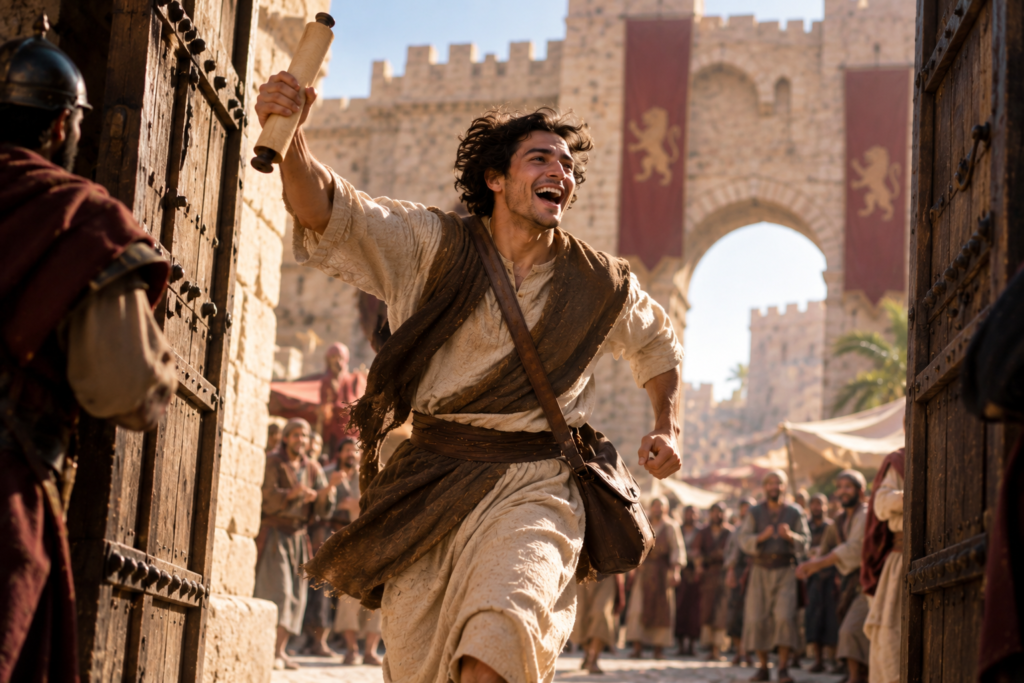
What does The Kingdom means, Jesus as the Fulfillment of God’s promise, and Living as Kingdom Ambassadors on Earth INTRODUCTION Christianity begins with an announcement: Something has happened: God has acted in human history through Jesus Christ. The message of Christianity is not that people should behave better, attend church, or become more religious. It is not merely a list of moral instructions. It is not primarily advice about how to reach God and go to heaven. It is good news about what God has done to rescue humanity and restore His creation. Jesus called this message the gospel of the Kingdom of God. The word gospel means good news. The word Kingdom refers to the rule, authority, and government of a king. The gospel of the Kingdom is the good news that God’s promised King has come. Through Jesus, God has acted to confront sin, defeat death, reconcile humanity to Himself, and begin the restoration of creation. This message is the center of Jesus’ teaching. Jesus did not teach people how to go to heaven after they died. He announced that the Kingdom of God had come near and demonstrated that Kingdom through His words, His actions, His death, and His resurrection. The gospel invites us to receive forgiveness and eternal life, and also calls us to recognize Jesus as King and learn to live under His authority. KEY TERMS TO CONSIDER Gospel: The good news that God has acted through Jesus Christ. Kingdom of God: God’s rule, authority, and government becoming active within His creation. Image of God: Humanity’s identity and calling to reflect and represent God. Dominion: Responsible authority exercised under God’s authority. Sin: Humanity’s rebellion against God and departure from His design. Messiah: The promised and anointed King sent by God. THE KINGDOM What is the Kingdom of God, and why is its arrival good news? The word “gospel” means “good news”. In the original language of the New Testament, the word is “euangelion”. It referred to an important public announcement that changed the condition of the people who heard it. One of the clearest pictures behind this word is that of a messenger returning from the battlefield. While the king and the army were fighting outside the city, many people remained behind the walls. Families, elders, women, and children waited without knowing the outcome of the battle. Their safety, freedom, and future depended on what was happening beyond their sight. They could not see whether the king was alive, know whether the enemy had been defeated or not know whether their city was still secure or whether an invading army was approaching. Then a messenger appeared in the distance, running toward the city. His message was not advice about how the people should fight, a personal opinion or an encouraging idea. He was carrying news from a battle that had already taken place. If the messenger entered the city announcing, “The king is alive! We have won! The enemy has been defeated!” the people would rejoice. The announcement meant that the threat had been overcome. Their enemy no longer had the victory. Their king had prevailed, and the people could now live in the security and freedom created by his triumph. This is an important picture of the Christian gospel. The gospel is the announcement that the King has fought the decisive battle and has won. Jesus has confronted sin, death, and the powers of darkness. He was crucified, but He did not remain in the grave. He rose from the dead and now reigns as Lord. The message of the gospel is therefore not, “Try harder so that someday you may win.” The message is, “The King is alive. The enemy has been defeated. The victory has been secured.” The people who hear this announcement are now invited to believe the news, recognize the victorious King, and begin living in the reality of His triumph. (Read Isaiah 52: 1-10) This helps us understand the difference between advice and news. Advice tells us what we should do, how to win a battle, or explain how a person can become free. News in the other hand tells us what has already happened, announces that the battle has already been won, and announces that someone has acted to secure that freedom. Christianity contains instructions about how we should live. However, those instructions are not the beginning of the gospel. The gospel begins with God’s action. The gospel calls for a response, but our response does not create the good news. We respond because God has already acted. This is why the gospel is not first a message about human achievement. It is a message about divine accomplishment. Read Mark 1:14–15 Jesus came into Galilee announcing the gospel of God. His message was that the time had been fulfilled and the Kingdom of God had come near. Jesus was declaring that a promised moment had arrived. Something long expected was now becoming a reality. WHAT IS A KINGDOM? When modern people hear the word kingdom, they may imagine a country, a castle, or a territory ruled by a king. A kingdom can include a territory, but a kingdom is more than a place. A kingdom is the active rule of a king. It includes the king’s authority, government, values, decisions, and order. The Kingdom of God is therefore not simply a place called heaven. It is God exercising His rightful authority over His creation. The Kingdom of God is present wherever God’s will is received, His authority is recognized, and His purposes are expressed. This is why Jesus taught His disciples to pray: “Your Kingdom come. Your will be done on earth as it is in heaven.” The prayer connects the coming of God’s Kingdom with the doing of God’s will. When God’s Kingdom comes, life begins to come into alignment with His intention, rcan be restored, injustice can be confronted, and people can be healed. Those who have been rejected can receive dignity, find freedom if
Why Isolation Breaks Design: A Theology of the Body of Christ

Introduction When the New Testament speaks about the Church, it uses several images to help believers understand its nature. The Church is described as a family, a household, a temple, a bride, a people and a priesthood. Yet one of the most powerful descriptions appears repeatedly in the writings of the apostle Paul: the Church is the Body of Christ. This language is much more significant than simply saying that Christians should work together. Paul is revealing something about the actual identity and design of the Church. Christianity was never intended to consist of spiritually independent individuals who believe in the same God, attend the same gatherings and occasionally cooperate with one another. Through the Holy Spirit, believers have been incorporated into one Body. They remain distinct persons with different gifts, personalities, assignments and functions, but they now participate in a shared life under one Head: Christ. For this reason, community cannot be treated as an optional feature of Christianity. It is possible to prefer solitude, to have a more introverted personality, or to require periods of personal withdrawal and rest. None of those things is inherently problematic. Isolation, however, is something different. Isolation occurs when a member attempts to live and function independently from the Body to which God has joined him or her. Paul’s theology makes such independence incompatible with the design of the Church. This study therefore begins with identity rather than obligation. The purpose is not to convince believers that they should become more social or attend more activities. The deeper objective is to understand what God has already made us in Christ. Once believers understand that they are members of Christ’s Body, community stops being merely something Christians are supposed to practice and becomes the natural expression of who they already are. This is an important New Covenant principle: identity precedes behavior. We do not become the Body of Christ by behaving correctly. We learn to behave as the Body because, in Christ, that is what we have already become. The central question of this study is therefore not simply, “Do I participate in Christian community?” It is much deeper: What does it mean for me to be a member of the Body of Christ, and what happens when I attempt to live contrary to that design? WE ARE THE BODY OF CHRIST Paul’s Declaration of Identity One of Paul’s clearest statements concerning the identity of the Church appears in 1 Corinthians 12:27: “Now you are the body of Christ and individually members of it.” The importance of Paul’s wording should not be overlooked. He does not tell the Corinthians that they should try to become the Body of Christ. Neither does he present the Body as an ideal that spiritually mature Christians might eventually achieve. He declares it as an existing reality: you are the Body of Christ. This distinction is especially important when reading Paul from a New Covenant perspective. Paul frequently establishes identity before giving instructions concerning behavior. He tells believers what God has accomplished in Christ and then teaches them how to live consistently with that reality. Christian obedience is therefore not an attempt to manufacture a new identity through human effort. It is the response of people who are learning to live according to the identity they have already received in Christ. The Corinthians provide an excellent example because they were far from a perfect congregation. Their community contained divisions, immaturity, competition, misuse of spiritual gifts and serious relational problems. Yet Paul did not tell them that their failures meant they had ceased to be the Body. Instead, he corrected their behavior by reminding them of what they were. This establishes an important discipleship principle: Identity becomes the foundation for correction. Paul’s reasoning is essentially, “Because you are the Body, learn to behave as the Body.” This changes the way Christian community should be taught. The starting point is not guilt: “You are a bad Christian because you are not sufficiently involved.” The starting point is revelation: “You belong to something God has created in Christ. Let us understand what that means.” One Body, Many Members Paul develops this idea in 1 Corinthians 12:12–14 by comparing the Church to the human body. A physical body possesses many different members while remaining one body. An eye is not a hand, a hand is not a foot, and a foot is not an ear. Their differences do not threaten the unity of the body. Their differences actually make the body capable of functioning. Paul therefore holds together two realities that Christian community must never separate: unity and distinction. Biblical unity does not require everyone to become the same. The Body does not become healthy by transforming every member into an eye. Neither does diversity require separation. The hand does not need to leave the body in order to preserve its identity as a hand. The same principle applies to the Church. Believers bring different personalities, experiences, abilities, spiritual gifts and assignments into the community. The goal of discipleship is not to eliminate those differences but to bring them under the government of Christ so that they contribute to a common purpose. This means Christian individuality is legitimate, but Christian independence is something entirely different. Individuality recognizes, “God has made me a distinct member.” Independence declares, “I can fulfill my purpose without the other members.” Paul accepts the first and dismantles the second. Incorporated Into One Body by the Spirit Paul explains in 1 Corinthians 12:13 that “in one Spirit we were all baptized into one body.” This means that incorporation into the Body is fundamentally a work of the Holy Spirit. We should distinguish this spiritual reality from merely joining a religious organization. A person can add his name to a church membership list, attend services, participate in programs and still fail to understand the spiritual reality of the Body. Conversely, our membership in Christ’s Body does not originate in an administrative process. The Spirit joins believers to Christ and, in
The Spirit Within

Presence, Guidance, and Transformation “But you will receive power when the Holy Spirit has come upon you, and you will be my witnesses in Jerusalem, in all Judea and Samaria, and to the ends of the earth.” The disciples had seen things no generation before them had witnessed. They had watched blind eyes open, storms become silent, demons retreat, and the dead return to life. They had heard Jesus speak about the Kingdom of God with an authority that unsettled religious leaders and awakened hope in ordinary people. Then, just as suddenly, everything changed. Jesus was arrested, crucified, buried, and raised from the dead. Now He stood before them alive. They must have assumed that this was the moment when everything would finally begin. Perhaps they expected immediate action, visible victory, and rapid expansion. Instead, Jesus gave them an unexpected instruction: wait. They had the message and the testimony. They had walked with Jesus personally, yet He told them not to move forward until they had received the promise of the Father. They would be “clothed with power from on high.” The Holy Spirit would come upon them, and they would become witnesses of the risen King. This moment reveals something essential: the Christian life was never designed to be lived through human strength alone. The Holy Spirit is not an optional addition to faith, but the continuing presence of Christ, the guide into truth, the power for witness, and the One who transforms believers from within. Jesus’ Promise of the Holy Spirit Luke 11:9–13; John 7:37–39; John 14:15–27; John 15:26–27; John 16:7–15 A coherent study of the Holy Spirit should begin with Jesus because the New Testament presents the Spirit’s New Covenant ministry as inseparable from the identity, death, resurrection, exaltation, and mission of Christ. Jesus did not introduce the Holy Spirit as an independent spiritual subject. He spoke of the Spirit while preparing His disciples for His departure and explaining how His presence and work would continue among them. The Spirit as the Father’s Gift In Luke 11, Jesus describes the Father as one who gladly gives the Holy Spirit to those who ask Him. The comparison with human parents is important. Jesus is not teaching that the Father must be pressured into generosity. He is correcting distorted perceptions of God. If imperfect human parents know how to provide what is good for their children, the Father’s generosity is infinitely more dependable. The Holy Spirit is therefore introduced as a gift arising from the goodness of the Father, not as a reward earned by spiritual performance. John 7:37–39 adds another dimension. Jesus invites the thirsty to come to Him and drink, declaring that rivers of living water will flow from within the believer. John explains that Jesus was speaking about the Spirit, whom believers would receive after Jesus was glorified. The language of thirst, drinking, and living water communicates both satisfaction and overflow. The Spirit does not merely meet a private need; the life received through Christ becomes a source of life that flows outward. A Helper and the Continuing Presence of Christ In John 14, Jesus promises “another Helper,” using the Greek word paraklētos. The term can communicate the ideas of advocate, counselor, helper, representative, and one who comes alongside another. The word “another” does not suggest a substitute disconnected from Jesus. It indicates that the Spirit will continue among the disciples the kind of divine help and presence they had experienced in Christ. Jesus immediately connects the promise of the Spirit with the assurance that He will not leave His disciples as orphans. This is one of the most important interpretive keys in the passage. The Spirit’s coming means that the disciples will not be abandoned by God when Jesus is no longer physically present in the same way. Through the Spirit, the life, teaching, authority, and presence of Christ continue within His people. From Presence with Them to Presence Within Them John 14:17 describes the Spirit as one who was with the disciples and would be in them. This language marks a decisive movement in the biblical story. Under the New Covenant, the presence of God is not centered in a geographical sanctuary or restricted to selected leaders for particular assignments. God makes His dwelling within His people. This indwelling presence should not be reduced to a feeling. A believer may feel spiritually alert, emotionally moved, dry, distracted, or exhausted, but the reality of indwelling rests on God’s promise rather than emotional intensity. The New Covenant believer does not live by repeatedly trying to attract a distant God. The believer learns to live in awareness of the God who has already made His home within His people. The Spirit as Teacher and Witness Jesus promises that the Spirit will teach the disciples and bring His words to their remembrance. This teaching ministry was especially important for the apostolic witnesses who would preserve and proclaim the meaning of Jesus’ life and work. The Spirit would not create a message unrelated to Jesus. He would illuminate, clarify, and faithfully communicate what Christ had revealed. John 15 describes the Spirit as the One who testifies about Christ. The disciples also testify, but their witness is grounded in the Spirit’s witness. This establishes a permanent test for claims of spiritual activity. Authentic ministry of the Spirit makes Christ clearer, not less central. The Spirit does not draw attention away from Jesus toward personalities, experiences, movements, or spiritual status. The Spirit and the World’s False Conclusions John 16:8–11 is often summarized by saying that the Spirit makes people feel guilty about wrongdoing. The passage is more precise. Jesus says that the Spirit will expose the world’s error concerning sin, righteousness, and judgment. The issue of sin is focused on unbelief in Christ. The issue of righteousness is interpreted through Jesus’ return to the Father, which vindicates Him. The issue of judgment is that the ruler of this world has been judged. The Spirit therefore confronts the world with the
Accountability, Character, and The Private Life of A Leader

This module is designed to confront one of the most dangerous realities in Christian leadership: a leader can be gifted, visible, influential, and admired while privately becoming unhealthy, unaccountable, and spiritually compromised. The goal of this lesson is not to create fear, shame, or suspicion. The goal is to build leaders who can be trusted. The Church does not need more talented people with unmanaged private lives. The Church needs men and women whose character can carry the weight of their calling. Bad leadership does not only damage the leader. Bad leadership destroys culture. It weakens trust, confuses disciples, wounds families, divides teams, and distracts the church from its mission. A leader’s private compromise eventually becomes a public cost that others are forced to pay. Introduction: The Crisis Beneath the Gift The most dangerous crisis for a leader is not a lack of talent. It is a lack of character. Many leaders know how to preach, sing, lead, organize, communicate, inspire, manage people, build programs, and stand in front of a crowd, but not every leader knows how to live clean when no one is watching. Not every leader knows how to remain humble when people praise them, how to receive correction without becoming defensive, how to handle pressure without bleeding on others, or how to protect their soul when the platform grows. This is why success without character is one of the greatest threats to Christian leadership. A gifted leader can impress people quickly, but a mature leader forms people slowly. A gifted leader may create momentum. A mature leader creates culture. A gifted leader may gather attention. A mature leader builds trust. The danger comes when a leader’s influence grows faster than their inner life. Modern ministry has made visibility easier than ever. A person can preach a clip, post a quote, gain followers, lead a room, and appear spiritually mature before their character has been tested. The modern platform can amplify gifts before maturity exists. When visibility grows faster than character, the soul begins to collapse under a weight it was never prepared to carry. Paul told Timothy: “Take heed to yourself and to the doctrine.”— 1 Timothy 4:16 That order matters. Paul does not only say, “Watch your doctrine.” He first says, “Watch yourself.” Before Timothy could guard the teaching, he had to guard his life. Before he could lead people, he had to examine the condition of his own soul. This is important because an unhealthy life eventually distorts doctrine. A leader may still quote Scripture correctly, but if their life is ruled by pride, secrecy, lust, greed, bitterness, control, or exhaustion, eventually they will begin using Scripture to defend what God is trying to correct. Bad leadership does not always start with false teaching. Sometimes it starts with a true message carried by an unsubmitted life. A leader’s life always preaches before their mouth does. Talent is the ability to do something well. Character is the inner formation that determines whether that ability can be trusted. Talent reveals what a person can do. Character reveals who a person actually is. The Danger of Talent Without Character This distinction is crucial because giftedness can operate even when the heart is unhealthy. A person may be able to lead worship while privately living in impurity. A person may be able to preach powerfully while secretly feeding pride. A person may be able to organize ministries while treating people harshly. A person may be able to give spiritual advice while refusing correction in their own life. The Bible gives us serious examples of this danger. Samson had strength, calling, and supernatural empowerment, but he lacked self-control. He could defeat enemies publicly while being defeated privately by his appetites. His problem was not that he had no anointing. His problem was that his character was not submitted to God at the same level as his gift. Saul had position, authority, and public responsibility, but he lived in partial obedience. He wanted the appearance of honor without the surrender of obedience. Saul teaches us that a person can sit in a legitimate role while slowly becoming spiritually disqualified in the heart. Judas walked with Jesus, heard the teachings, saw miracles, participated in ministry, and remained close to holy things. Yet proximity to Jesus did not mean surrender to Jesus. Judas teaches us that being around the presence of God is not the same as yielding your heart to God. These examples are not just ancient stories. They are warnings for leaders today. Gifts impress people. Character protects people. Gifts can open doors. Character determines whether a leader can remain healthy behind those doors. Gifts may attract followers. Character determines whether those followers are formed, manipulated, wounded, or used. When a leader has talent without character, the culture around them becomes unstable. People learn to admire the gift while ignoring the damage. Teams begin excusing behavior that should be confronted. Spiritual language becomes a cover for emotional immaturity. Loyalty gets confused with silence. Honor gets twisted into enabling. Eventually, the mission suffers because the leader’s unresolved private life becomes the culture’s public dysfunction. A leader without character does not merely have a personal problem. A leader without character becomes an environmental problem. The statement is true: gifts can open doors that character cannot hold. The Hidden Life of the Leader The hidden life of a leader is the part of their life that people do not normally see. It includes their thoughts, desires, habits, motives, private conversations, online behavior, emotional patterns, prayer life, money practices, sexuality, family life, and response to correction. Many people judge leadership by public performance. God examines the hidden life. Jesus said: “Your Father who sees in secret will reward you.”— Matthew 6:4 He also said: “For nothing is hidden that will not be made manifest, nor is anything secret that will not be known and come to light.”— Luke 8:17 These words should sober every leader. God is not impressed by the version of
Kingdom Justice, Ethics, and Counter-Cultural Living

Manifesting the Kingdom Within Human Systems Introduction One of the greatest dangers facing modern believers is not persecution, atheism, or even moral decline. One of the greatest dangers is unconscious discipleship by culture. Every society disciples its people. Every civilization produces a moral imagination. Every culture teaches its citizens what justice means, what success means, what human value means, who deserves compassion, who deserves outrage, who is considered righteous, and who is considered dangerous. These systems of formation happen constantly through media, education, entertainment, political rhetoric, social pressure, algorithms, institutions, economic structures, historical narratives, and even religious environments. The modern believer often assumes they are thinking biblically when in reality they are interpreting Scripture through frameworks inherited from culture. This is especially true in regions like Washington DC and its surrounding areas, where believers live surrounded by systems of government, military influence, policy institutions, lobbying structures, global diplomacy, multicultural realities, media narratives, and ideological conflict. In such an environment, it becomes extremely easy for Christians to unconsciously replace the culture of the Kingdom of God with the culture of political tribes, ideological movements, or reactionary social identities. This class exists to confront that reality directly. The purpose of this study is not to produce passive Christians detached from society, nor activists emotionally absorbed into ideological warfare. The goal is to form believers who understand the ethics, justice, priorities, and culture of the Kingdom of God deeply enough to live faithfully inside complex human systems without becoming spiritually assimilated by them. This requires maturity because Scripture presents a reality that modern culture often struggles to accept: The Kingdom of God is not fully compatible with any human civilization. Every human system, regardless of political affiliation, ethnicity, ideology, or historical achievements, contains traces of both human dignity and human fallenness. This includes democracies, empires, socialist systems, capitalist systems, monarchies, revolutions, activist movements, and even religious institutions. The believer must therefore learn how to operate within systems without allowing those systems to become their source of identity, morality, hope, or ultimate allegiance. The New Testament repeatedly describes believers as ambassadors, exiles, pilgrims, foreigners, and citizens of another Kingdom. These are not poetic metaphors merely describing heaven after death. They are descriptions of present identity. Philippians 3:20 states:“Our citizenship is in heaven.” This does not mean believers abandon earthly responsibility. It means their governing allegiance originates from a higher authority than culture, politics, ethnicity, or ideology. Understanding this is essential because the modern world increasingly pressures people into total ideological conformity. Neutrality is often interpreted as betrayal. Complexity is treated as weakness. Nuance is rejected in favor of outrage. Emotional reaction is rewarded more than wisdom. Public performance often replaces genuine righteousness. The Kingdom of God calls believers into a radically different way of living. 1. The Kingdom of God and Human Kingdoms Humanity’s Constant Desire to Build Without God The tension between the Kingdom of God and human systems begins very early in Scripture. Genesis 11 describes the Tower of Babel, one of the most important narratives for understanding civilization itself. Humanity gathers together with a unified vision to build a city and tower “for ourselves.” The issue in Babel was not architecture or technological advancement. The issue was autonomous civilization disconnected from God’s order. Humanity desired unity, security, power, reputation, and centralized control apart from dependence on God. That impulse never disappeared. Throughout biblical history, empires repeatedly emerge that embody this same pattern: These empires differ culturally and politically, yet they share a common characteristic: human systems attempting to establish ultimate authority over meaning, morality, economics, identity, and power. The Bible does not deny that civilizations can produce order, innovation, infrastructure, law, or even relative justice. Rome, for example, built roads, legal systems, and military stability across vast territories. Yet Scripture consistently reveals that every empire eventually becomes corrupted by idolatry, domination, pride, exploitation, or dehumanization because fallen humanity cannot fully sustain justice apart from God. This is crucial for modern believers to understand because many Christians unconsciously treat political systems as if they possess salvific power. Entire segments of the Church become emotionally dependent on elections, parties, policies, ideologies, or national identities as if the future of righteousness itself depends on earthly power structures. But Jesus never preached political salvation. He announced a Kingdom. Mark 1:15 records Jesus declaring:“The Kingdom of God is at hand.” This statement carried enormous political and spiritual implications because kingdoms are not merely religious concepts. A kingdom involves authority, culture, ethics, citizenship, and allegiance. Jesus was not simply offering private spirituality. He was introducing an entirely different order of life under the rule of God. Yet remarkably, Jesus did not attempt to overthrow Rome politically. This is one of the most misunderstood realities in modern Christianity. 2. Jesus and the Question of Justice Why Jesus Did Not Organize Political Revolution Against Rome? To understand the radical nature of Jesus’ ministry, students must understand the historical climate of first-century Judea. Israel existed under Roman occupation. Rome imposed taxation, military control, political surveillance, and imperial authority over conquered peoples. Many Jews longed for liberation. Various revolutionary groups emerged during this period, especially the Zealots, who believed violent resistance against Rome was necessary. Many expected the Messiah to become a political liberator who would overthrow Roman oppression and restore Israel’s national sovereignty. Yet Jesus consistently refused that path. This shocked many people. Jesus healed the oppressed, cared for the marginalized, confronted corruption, and exposed hypocrisy, yet He never organized armed resistance against Rome. He never demanded Caesar become righteous. He never built a political movement to seize imperial power. Instead, He repeatedly confronted the corruption of religious leadership. This distinction matters profoundly. The harshest words Jesus ever spoke were directed not toward Roman governors but toward religious elites who claimed to represent God while exploiting people, manipulating truth, and preserving systems of spiritual hypocrisy. Matthew 23 contains one of the strongest ethical confrontations in Scripture. Jesus accuses religious leaders of: This reveals an extremely important Kingdom principle: Jesus